Analytical Framework
Engagement Disciplines
Phishing Emails
Compliance
Forensic Analytics
Governance Review
Suspicious Activity Monitoring
Transaction Analysis
Analytical Framework Structure
Engagement Definition and Scope Validation
Objectives, scope boundaries, engagement type, stakeholders, and delivery requirements are defined. Applicable standards, reporting expectations, and regulatory considerations are identified. Assumptions, constraints, and dependencies are documented before procedures begin.
Data Intake, Normalization, and Integrity Controls
Client-provided records are collected and cataloged in a controlled intake process. Data is normalized into consistent formats. Completeness, internal consistency, and traceability are validated. Integrity checks are performed prior to analysis to reduce error and prevent unsupported conclusions.
Structured Analytical and Documentation Review
Financial and operational records are evaluated using defined analytical procedures appropriate to the engagement scope. Procedures include reconciliation analysis, variance and trend evaluation, outlier and anomaly identification, pattern testing, consistency validation, and supporting documentation verification. Methods, parameters, and results are recorded to support reproducibility.
Risk Classification and Control Assessment
Observed irregularities, inconsistencies, and control gaps are evaluated within a defined risk classification structure. Control design and control execution are assessed. Governance exposure is documented objectively, including segregation of duties, approval discipline, documentation standards, access governance, and override risk.
Evidence Correlation and Validation
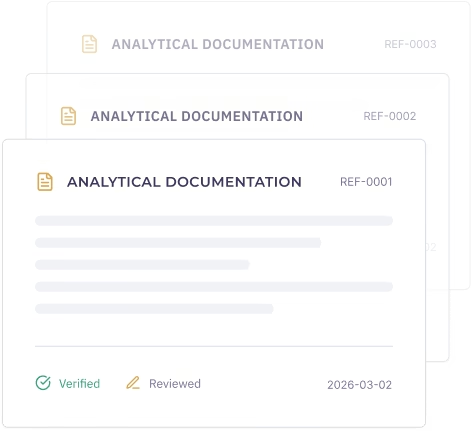
Analytical findings are mapped to referenced source records and supporting artifacts. Exceptions are cataloged with clear support gaps. Evidence is preserved in structured Analytical Documentation to maintain traceability from input records through analytical procedures to conclusions.
Conclusion Development, Reporting, and Decision Support
Conclusions are prepared in written form supported by documented procedures and referenced evidence. Deliverables are structured to support internal governance review, lender or investor review, audit preparation, regulatory examination readiness, and investigation support. Recommendations are framed as corrective actions, governance improvements, or operating controls tied to documented findings.
Remediation Oversight and Verification
When remediation support is in scope, corrective action plans are documented with ownership, deadlines, and verification checkpoints. Follow-up testing validates whether controls, documentation discipline, and operational practices were implemented as designed.
Archiving, Record Preservation, and Cryptographic Verification
Final engagement outputs, Analytical Documentation, and evidence references are preserved in a controlled archive designed for long-term retention and retrieval. Records are preserved as verifiable artifacts using cryptographic verification and proof-of-existence techniques to establish integrity, prevent post hoc alteration, and maintain defensible evidentiary history suitable for audits, examinations, disputes, and investigations.

Risk Classification Matrix
- Low
- Moderate
- Elevated
- Critical
Evidence Mapping
Evidence Correlation & Validation
Source Records
Analytical Documentation
Verification Logs
Audit Trail
Control Review Cycle
Control Cycle
Review
Validation
Documentation
Oversight
Continuous
Improvement
Control Cycle
Review
Validation
Documentation
Oversight
Continuous
Improvement
Risk Classification Matrix